
Freedom Through Innovation - The Story of Syncurrent
If you are looking to truly understand a place and its community, where do you turn? Is it the corners of the busiest streets? Is it big community events? Or, perhaps the best spots for photo ops?
To truly understand a community, we suggest you turn to the ideas that emerge from it–and, importantly, the people who bring those ideas to life.
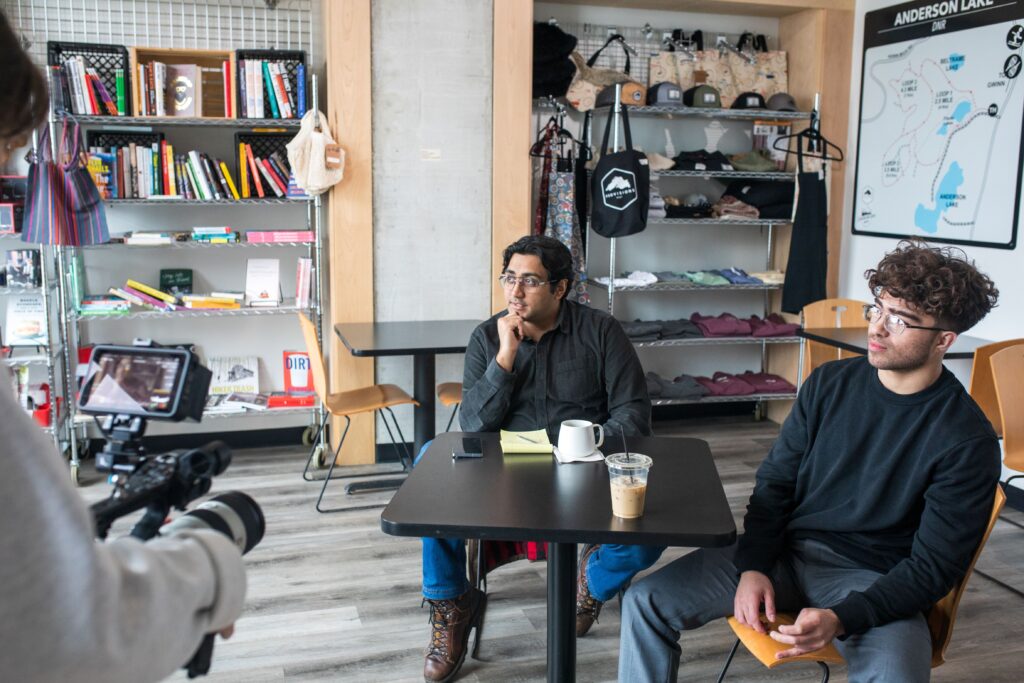
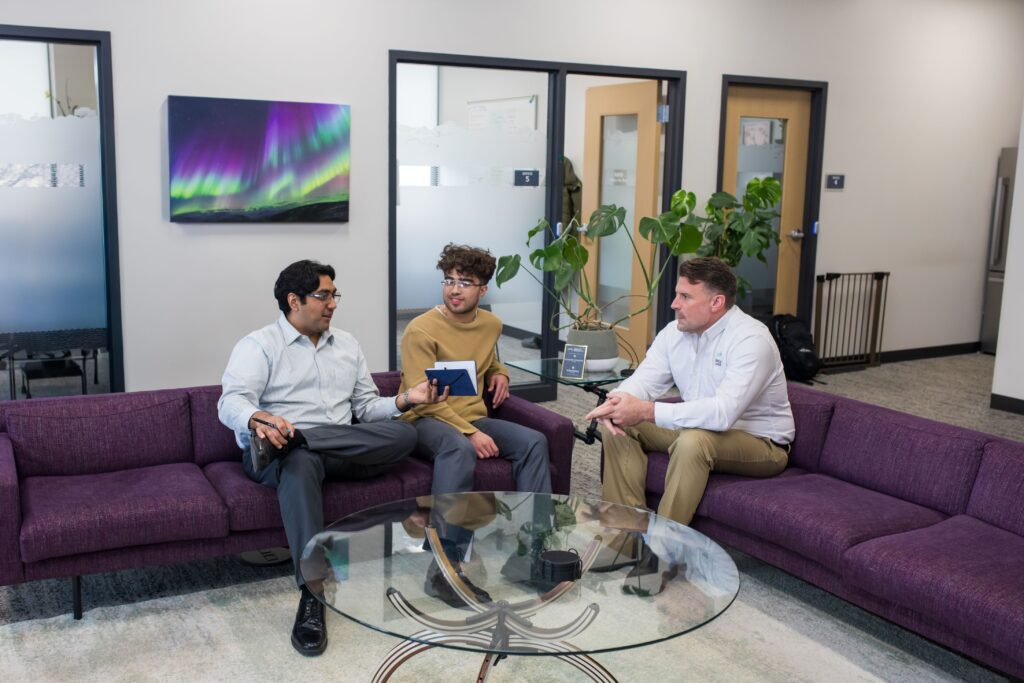
For Marquette, shining as one of the brightest ideas is Syncurrent, a technology company founded by Dhruv C. Patel and Matthew Jaquez. The story of Syncurrent, with its genuine care of community, embodies the spirit of entrepreneurship in Marquette.
For our next People of Marquette feature, we’ll get to know the Marquette company that is supporting municipalities and Tribal Nations across the country, and the two founders whose vision is now a reality.
What is Syncurrent?
Small governments make up most of the United States; they’re defined as municipal, Tribal, county or special district governments. Unless you work in one of these small governments, or frequently have grant applications come across your desk, you may have not heard of Syncurrent. Yet to the civil servants leading and building our communities, Syncurrent is a critical tool that benefits the entire community.
Syncurrent has a clear goal: connect small governments to much-needed funding. Their technology learns the needs of the government, and then runs those needs against every state and federal resource available. When a small government finds a funding opportunity they want to go after, the Syncurrent technology guides civil leaders step by step through the application process. A process that historically took a department weeks to do, now it takes only a few minutes with a single user.
As Dhruv C. Patel, Co-Founder and CEO of Syncurrent describes it, “Syncurrent is the funding tool for government. We reduce the time it takes small governments to identify funding from a months-long, manual process down to a few minutes.”
Building the Missing Piece - What Syncurrent Seeks to Solve
The process of identifying and applying for funding that many small governments endure is nothing short of arduous, confusing, and incomplete.
There’s a myriad of reasons for this. Funding opportunities are posted in all corners of the Internet, yet finding them can be nearly impossible. There isn’t a standard format funding applications are built from–the way a state government writes one and the way a federal agency writes another is totally different. Yet, small governments are expected to know and understand the difference.
More importantly, small governments simply don’t have the personnel to spend the time and effort searching for funding, sifting through requirements, and completing often lengthy applications. If a village government only has three or four staff members, which one is supposed to drop their day-to-day work in order to find the funding and fill out the applications?
“It’s a landscape of chaos,” Dhruv explains. “You are forced to click, to click, to download, to click, to read, to click. And it’s a nightmare.”
The time and resources spent searching for grant opportunities–whether the effort ends up successful or not–is critical and finite. Worse, it means those resources cannot be spent elsewhere. Most small governments simply don’t have enough to go around.
The co-founders originally came across this problem at their previous company they ran together, which ushered local communities through the process of applying for funding opportunities. During that time, they continually heard that their clients were struggling the most with finding funding opportunities to apply to in the first place.
Matthew Jaquez, Co-Founder and Chief Product Officer, recalled, “We realized the disparity small governments face when it comes to actually accessing funding for their communities.”
Upon discovering where the biggest hurdles existed for their customers, Dhruv and Matthew sought to completely metamorphose the funding process for small governments.
Made to Work - How Syncurrent was Built
Dhruv and Matthew’s experience assisting organizations and governments with applying for grant applications made them well-versed in understanding gaps in the process and what needed to be done to overcome them.
Since the beginning of Syncurrent in 2022, the Co-Founders have remained laser focused on developing a solution that truly works for those it serves. For Syncurrent, Tribal Nations were first in line. Dhruv explains, “When we talk about rural communities, Tribal Nations historically have been at the back of the line in terms of technology adoption, through no fault of their own.”
Beyond the funding landscape, they saw how technology tools available to Tribal governments continually failed to hit the mark and were often tools not suited for Tribal Nations, yet sold as if they were.
This common occurrence is what made the prospect of building a platform that is easily navigable, delivers results, and truly works for Tribal Nations their north star during the development process.
“It brings people who have been historically pushed to the back of the line all the way to the front through a solution that’s built for them, specifically, at the onset,” Dhruv describes.
This approach worked. They’ve met with countless government leaders who are amazed to discover how truly helpful the platform is toward the unique needs of their community–all in just a few minutes of using the platform.
Syncurrent now has 97 federally recognized Tribal Nations using their platform–about one sixth of the total federally recognized Tribal Nations that exist across the country.
Through their relentless pursuit of creating what can truly transform critical processes like finding funding, they discovered how their platform is of use to local governments, particularly those in rural areas.
Many small, rural local governments face the similar strains on time and resources that Tribal governments face in the process of finding and applying for funding. As Syncurrent is built to complete comprehensive searches to find funding opportunities based on your community’s needs and capabilities, the capacity of rural communities to do the legwork to find funding is no longer a barrier.
“No city government can come to me and say, ‘We’re too rural for you,’ because we have four Alaskan villages using our technology,” Dhruv shares as evidence to his point. “I can’t tell you where in Alaska they are. I can tell you that their population needs planes in order to get groceries.” It’s a comforting reminder for many government leaders that Syncurrent is truly made to help them–and that there’s no such thing as ‘too rural.’
Syncurrent is now used by more than 200 governments across the United States, in addition to their 97 federally recognized Tribal Nations with which they work.
Beyond their expansive reach to small governments across the country, Syncurrent continues on its trajectory of growth with several impactful milestones in its wake. This includes the first-ever USDA Rural Development partnership with an AI company, opportunities to present in front of key leaders in Washington D.C., and countless meetings with government leaders across the country who’ve had the chance to see firsthand the doors Syncurrent can open in their community. They’ve also received well-deserved recognition for their impact, including placement on e.Republic’s Center for Public Sector AI inaugural AI 50 list, which honors organizations and individuals using artificial intelligence to transform the public sector. They were the only startup to make it on the list.
Through all of the tedious steps of developing a technology platform including the many iterations, trial and error, troubleshooting, and everything in between, Syncurrent continues to deliver a usable solution for governments to make the heavy lift of finding funding substantially lighter.
A great idea like that which inspired Syncurrent doesn’t become a reality without time, dedication, and individuals bold enough to will it into existence. And, telling Syncurrent’s story would be incomplete without sharing about the two people behind the idea who saw the vision from day one.
The Architects of Syncurrent - Meet Dhruv and Matthew
The pair’s story of working together begins long before Syncurrent, or even their previous venture, Hive.
They told us the story.
“We went to high school together, but we were kind of those classmates that talked inside of class, but not really outside of class,” Matthew shares. “I was the studious person that would try to do his work, Dhruv was more of the class clown, and we had the same friend group. And after graduation we didn’t really talk much.”
Though they went their separate ways after high school in the Chicago area, the dream of someday running a business together they had in high school became a real possibility several years later. It happened while Dhruv was running his first business and came to the realization that a business partner wasn’t just nice, but necessary.
“I called everybody on my phone. Every person I went to college with, every high school friend, just cold calling people to be a Co-Founder, which looking back is ridiculous,” Dhruv recollects. “And then Matt picked up, and the rest is history.”
From their work together at Hive helping organizations and local governments with grant writing to pivoting to Syncurrent and building the nationwide reach they have today, the duo has truly embraced the entrepreneurial spirit and are exemplars of what collaboration and innovation can create.
Dhruv and Matthew wouldn’t let the story of how Syncurrent was built start and end with them. From organizations and partners to the talent and counsel of individuals, many hands have played a role in Syncurrent’s journey thus far.


It Takes a Village - Supporting Syncurrent’s Success
The Co-Founders have grown the Syncurrrent team to seven talented individuals, based in Marquette as well as remotely across the country. From engineering and product support to marketing and research, Syncurrent is supported by a well-rounded team whose dedication to their work shines through in how their product and customer experience is a cut above.
“It’s because of these people and their perspectives that we’ve grown so much and so quickly,” Dhruv says of the team. “It’s by virtue of those that sink their time and soul and effort into this company. And they believe in us. There’s nothing more powerful than that.”
Milestones along the way show how collaborations and partnerships have truly left a mark on Syncurrent’s journey. One of those partners from the beginning has been Innovate Marquette SmartZone.
“Innovate Marquette is a place where big ideas in Marquette can actually experience reality,” says Dhruv. From helping to build Syncurrent as a true solution to what communities face, to identifying the right talent and partnerships, Innovate Marquette has served as a catalyst for growth, new opportunities, and historic partnerships for the company.
Reaching small governments in every corner of the country is also the result of connections with municipal leagues such as the Michigan Municipal League, as well as advisors on Tribal governments and rural communities.
As Syncurrent has expanded its impact to communities in all corners of the country, they recognize the role Marquette has played in getting where they are today.
Syncurrent Makes Marquette Home
To those unfamiliar with the entrepreneurial ecosystem in Marquette, this community may seem like an unlikely place for two people from the Chicago area to run their tech company. But the Co-Founders see the energy and resources among our community, and have harnessed it to do good for others.
“The way that we’ve been able to survive [the startup phase] is because of the Marquette community, and more specifically, Innovate Marquette SmartZone,” Dhruv elaborates.
“The fact that we’ve had resources here, mentors, experts in the field that have navigated us through trial and tribulation is what we can attribute our success to.”
Since relocating to Marquette–which for Dhruv was for college, and for Matthew was to become business partners with Dhruv–this community has also become home for them. The strong sense of community here was a welcome adjustment for them, and has made their ability to help other rural communities even greater.
“I think Marquette specifically gives you a sense of belonging and community. In urban life, you’re kind of just another number,” Matthew shares. “To be able to be in a community where you can walk down the street and talk to your neighbor is so fulfilling to experience that, and have that be welcome.”
Marquette has made an impact on Syncurrent, and that impact has gone both ways. The City of Marquette became one of ten municipalities in Michigan to participate in a pilot program resulting from Syncurrent’s partnership with the USDA to explore expanding Syncurrent’s platform for use by municipalities. Since the conclusion of the pilot program in 2025, the City of Marquette continues to use the platform and has benefitted from its capabilities.
As community members and as founders, Marquette has proven to be the right destination for Syncurrent to call home. “It’s an incredible community that is not only a great destination spot to recreate, but a place to live, work, build and play,” Dhruv says. “I wish people would come here and yes, vacation, but also explore the business community and see what we’ve got.”
Building Better Communities by Building What Works
Since Syncurrent’s start, the company has been focused on utility and accessibility. Their commitment to create solutions that truly transform has been unwavering.
It doesn’t mean they’ve chosen the route of simplicity in their solution. Rather, they understand that if they can take what’s complex–like the process of finding funding–and use advanced technology to simplify the process for others, it can truly move mountains and open doors to new opportunities and greater social good. “The overall outcome is to be able to think outside the box and think bigger,” Matthew says.
When the pursuit of ideas is encouraged, celebrated, and explored by others, it makes our community better. It makes those beyond ours better. Dhruv and Matthew’s story of building Syncurrent reminds us that great ideas originate from and flourish in great communities.
To learn more about Syncurrent, visit syncurrent.com
To watch the full video about Syncurrent, visit https://youtu.be/nw0VPYKnGiQ
Video by Aaron Peterson Studios